
Our Work

Summary of COP 30 Contributions
This text summarizes contributions that were discussed in the context of an independent council convened by COP30 President-designate, Ambassador André Corrêa do Lago, to inform on some economic dimensions of COP30, including contributions to the "Baku to Belem Roadmap to 1.3T" to be presented by the President of COP 29 and the President-designate of COP 30 and contributions to the COP 30 Action Agenda.
Read the full report
Carbon markets
Professors Rohini Pande, Robin Burgess, Maryam Farboodi, and Lucy Page propose the MARVIN architecture — Measurement and Accounting of emissions, Risk mitigation, and Verification Institution — as a framework to deliver transparency, trust, and accountability in global carbon markets. MARVIN aims to integrate technological and institutional mechanisms that ensure both environmental and financial integrity, particularly by enabling cost-effective mitigation in emerging and developing economies.
Read the proposal
Climate Coalition
Professor Catherine Wolfram and collaborators from the Global Climate Policy Project at Harvard and MIT (GCPP) propose a pragmatic solution to control GHG emissions: a Climate Coalition—a group of countries committed to making progress together by aligning carbon pricing, trade, and development policies.
Read the proposal
Decarbonization of EMDE’s power sector
Professors Patrick Bolton and Alissa Kleinnijenhuis put forward a proposal for financing the decarbonization of the power sectors in developing countries other than China. Their core argument is that global climate goals cannot be achieved without large-scale emissions reductions in these countries, since even a fully decarbonized group of advanced economies would still leave the world on track for at least 2.7°C of warming.
Read the proposal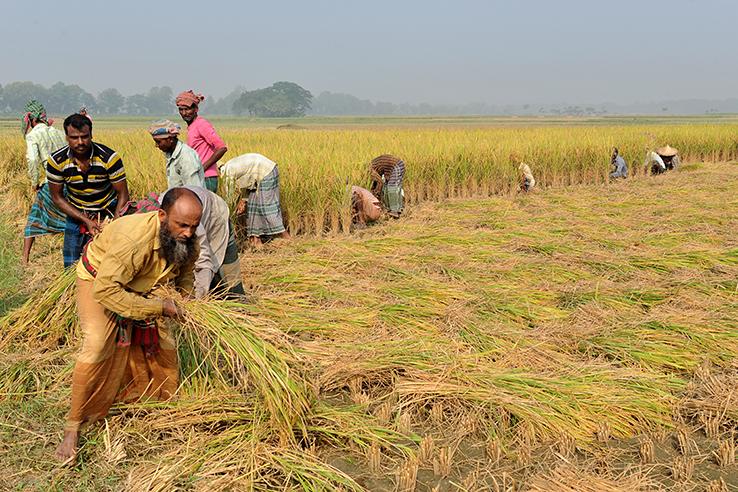
Loss and Damage – A Global Climate Grand Bargain
Professors Abhijit Banerjee, Esther Duflo, and Michael Greenstone put forward a plan that links climate compensation and climate action in a fair and actionable way, addressing one of the most persistent failures in global climate cooperation: the misalignment between who causes emissions and who bears the costs.
Read the proposal
Protecting Tropical Forests
Professor Juliano Assunção and the Climate Policy Inititiative/PUC-Rio team put forward a proposal to frame the forest–climate nexus, exploring how tropical forests can be more effectively integrated into the global climate agenda, building on the COP28 Global Stocktake decision that countries need to “halt and reverse deforestation and forest degradation by 2030” (UNFCCC, 2023), underscoring forests as both a climate challenge and a climate solution. In addition to jurisdictional REDD+, which focuses on halting deforestation, and the Tropical Forest Forever Facility (TFFF), which rewards the standing forest, they propose a new Reversing Deforestation Mechanism (RDM) to enable large-scale forest restoration.
Read the proposal
Remittances
Professors Harrison Hong, José Scheinkman and Jiangmin Xu propose a framework to strengthen climate adaptation in low-income countries, focusing on the interaction between private adaptation through migration and remittances and public adaptation financed by governments.